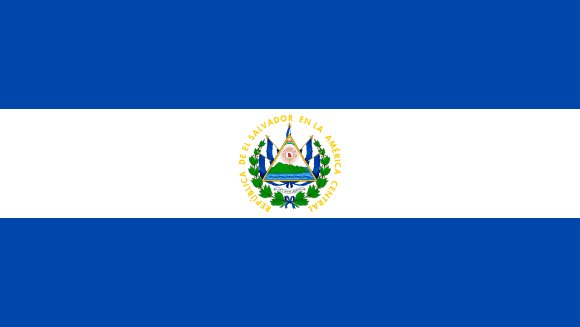
Administrative divisions of El Salvador
El Salvador is divided into 14 first-level administrative divisions:
Largest cities in El Salvador
| # | City | Population |
|---|---|---|
| 1 | San SalvadorCapital | 1,433,000 |
| 2 | Santa Ana | 234,478 |
| 3 | San Miguel | 201,563 |
| 4 | Sonsonate | 168,947 |
| 5 | Nueva San Salvador | 124,694 |
| 6 | Usulután | 51,910 |
| 7 | Cojutepeque | 48,411 |
| 8 | Zacatecoluca | 39,613 |
| 9 | San Vicente | 37,326 |
| 10 | Ahuachapán | 34,102 |
San Salvador is the largest urban area in El Salvador with about 1,433,000 people.
Terrain, rivers & lakes
Highest terrain in El Salvador: ≈ 2,718 m — read from the global elevation model, so summit heights are approximate. The physical map paints elevation bands from green lowlands to brown highlands.
🌊 Rivers
- Lempa
🏞️ Lakes
- Lake
Ethnic groups in El Salvador
Mestizo 86.3%, White 12.7%, Indigenous 0.2% (includes Lenca, Kakawira, Nahua-Pipil), Black 0.1%, other 0.6% (2007 est.)
Regionally, Mestizo is the most common ethnic group across most of the 14 divisions.
Source: CIA World Factbook (2007 est.) · regional dominance compiled by Glostats from censuses and surveys
Religions in El Salvador
Roman Catholic 43.9%, Protestant 39.6% (Evangelical - unspecified 38.2%, Evangelical - Methodist 1.3%, Evangelical - Baptist 0.1%), none 16.3%, unspecified 0.2% (2023 est.)
Regionally, Roman Catholic is the most common religious group across most of the 14 divisions.
Source: CIA World Factbook (2023 est.) · regional dominance compiled by Glostats from censuses and surveys
Languages in El Salvador
Spanish (official), Nawat (among some indigenous)
Regionally, Spanish is the most common language group across most of the 14 divisions.
Source: CIA World Factbook · regional dominance compiled by Glostats from censuses and surveys
Explore more
 United States
 Mexico
 Canada
 Guatemala
 Haiti
 Dominican Republic
 Honduras
 Cuba
Sources: boundaries, cities, rivers and lakes from Natural Earth (public domain, 1:10m); elevation from the AWS Open Data terrain tiles (SRTM/GMTED); ethnic, religious and language shares from the CIA World Factbook; regional dominance compiled by Glostats from national censuses and surveys. Page generated 2026-10-19. More about our data.