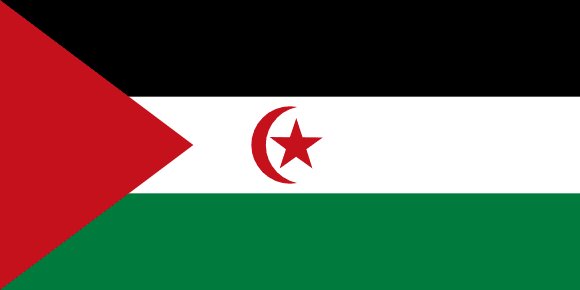
Quick facts
Western Sahara population overview
Western Sahara is the 53rd most populous of 58 countries and territories in Africa. The United Nations put the population at 606,790 on 1 January 2026; with an annual growth rate of +1.6% the live estimate on this page rises by roughly 26 people per day.
Over a full year that means about 8,920 births (14.7 per 1,000 people) and 4,005 deaths (6.6 per 1,000), plus net immigration of roughly 4,672 people. The infant mortality rate is 21.2 per 1,000 live births.
UN World Population Prospects data show the population grew from 14,000 in 1950 to 600,452 in 2025 — a change of +4,188.9%, or +5.1% per year on average. The population is at its all-time high today.
Demographically, the median age is 32.8 years; life expectancy at birth is 72 years.
Western Sahara population statistics (2026)
| Population (live, October 2026) | 614,435 |
|---|---|
| UN estimate, 1 Jan 2026 | 606,790 |
| World rank | #172 of 238 |
| Rank in Africa | #53 of 58 |
| Share of world population | 0.007% |
| Annual growth rate | +1.6% |
| Births per year est. | 8,920 |
| Deaths per year est. | 4,005 |
| Net migration per year est. | +4,672 |
| Birth rate | 14.7 per 1,000 |
| Death rate | 6.6 per 1,000 |
| Infant mortality | 21.2 per 1,000 births |
| Sex ratio | 122 males per 100 females |
| Median age | 32.8 years |
| Life expectancy | 72 years |
Western Sahara population by year
| Year | Population | Change | Annual growth |
|---|---|---|---|
| October 2026 (live, UN-based) | 614,435 | – | – |
| 2025 | 600,452 | +38,269 | +1.3% |
| 2020 | 562,183 | +54,072 | +2% |
| 2015 | 508,111 | +73,253 | +3.2% |
| 2010 | 434,858 | +95,508 | +5.1% |
| 2005 | 339,350 | +68,378 | +4.6% |
| 2000 | 270,972 | +43,510 | +3.6% |
| 1995 | 227,462 | +28,690 | +2.7% |
| 1990 | 198,772 | +32,892 | +3.7% |
| 1985 | 165,880 | +37,193 | +5.2% |
| 1980 | 128,687 | +57,742 | +12.6% |
| 1975 | 70,945 | -2,919 | -0.8% |
| 1970 | 73,864 | +28,598 | +10.3% |
| 1965 | 45,266 | +15,602 | +8.8% |
| 1960 | 29,664 | +9,060 | +7.6% |
| 1955 | 20,604 | +6,604 | +8% |
| 1950 | 14,000 | – | – |
Change and annual growth are measured against the previous row; growth is annualized where rows are five years apart. The live row extrapolates the UN estimate and is not directly comparable with the UN World Population Prospects series.
About Western Sahara
Detailed indicators
International organizations don't publish detailed statistical series (CO₂, energy, water, economy) for Western Sahara — this is normal for small territories and a few special cases. The live counters above run on the latest UN-based estimates, and the population history below comes from the UN World Population Prospects.
Population over time
- From 14,000 in 1950 to 614,435 today — up 4,288.8%.
- The population is at its all-time high right now.
- Average change over the last 50 years of data: +4.4% per year.
Western Sahara in the news
Frequently asked questions
What is the population of Western Sahara in 2026?
As of October 2026, Western Sahara has an estimated population of 614,435. The United Nations estimated 606,790 residents on 1 January 2026; the live figure on this page extrapolates that estimate using the +1.6% annual growth rate.
Is the population of Western Sahara growing or shrinking?
It is growing at +1.6% per year — roughly 26 more people every day. Each year there are about 8,920 births and 4,005 deaths, with net migration of +4,672.
What is the median age in Western Sahara?
The median age is 32.8 years, and life expectancy at birth is 72 years.
How does Western Sahara rank by population?
Western Sahara is the 172nd most populous of 238 countries and territories worldwide and the 53rd in Africa, with 0.007% of the global population.
How has the population of Western Sahara changed over time?
In 1950 the population was 14,000; by 2025 it had grown to 600,452 (+4,188.9%). The year-by-year table above lists the full UN World Population Prospects series.
Explore more
 Nigeria
 Ethiopia
 Egypt
 DR Congo
 Montenegro
 Suriname
 Malta
 Maldives
Sources & method: the live population is a linear extrapolation of the UN World Population Prospects estimate for 1 January 2026 using the annual growth rate (+1.6%); births, deaths and migration counters apply the UN crude rates to the live figure. Historical series, area, GDP and other indicators are from the UN World Population Prospects; the encyclopedic summary is from Wikipedia. Figures are statistical estimates, not census counts. Page generated 2026-10-19. More about our data.