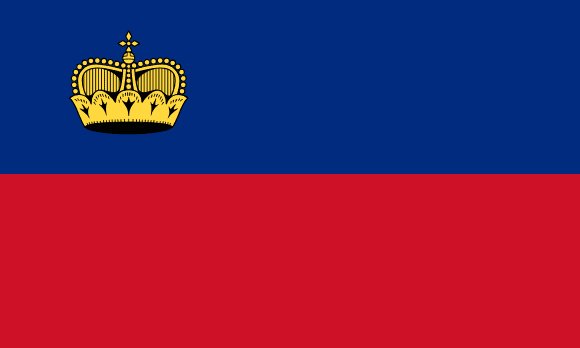
Administrative divisions of Liechtenstein
Liechtenstein is divided into 11 first-level administrative divisions:
Largest cities in Liechtenstein
| # | City | Population |
|---|---|---|
| 1 | VaduzCapital | 36,281 |
Vaduz is the largest urban area in Liechtenstein with about 36,281 people.
Terrain, rivers & lakes
Highest terrain in Liechtenstein: ≈ 2,269 m — read from the global elevation model, so summit heights are approximate. The physical map paints elevation bands from green lowlands to brown highlands.
🌊 Rivers
- Rhein
🏞️ Lakes
No major lakes at this scale.
Ethnic groups in Liechtenstein
Liechtensteiner 65.6%, Swiss 9.6%, Austrian 5.8%, German 4.5%, Italian 3.1%, other 11.4% (2021 est.)
Regionally, Liechtensteiner is the most common ethnic group across most of the 11 divisions.
Source: CIA World Factbook (2021 est.) · regional dominance compiled by Glostats from censuses and surveys
Religions in Liechtenstein
Roman Catholic (official) 73.4%, Protestant Reformed 6.3%, Muslim 5.9%, Christian Orthodox 1.3%, Lutheran 1.2%, other Protestant 0.7%, other Christian 0.3%, other 0.8%, none 7%, unspecified 3.3% (2015 est.)
Regionally, Roman Catholic is the most common religious group across most of the 11 divisions.
Source: CIA World Factbook (2015 est.) · regional dominance compiled by Glostats from censuses and surveys
Languages in Liechtenstein
German 91.5% (official, Alemannic is the main dialect), Italian 1.5%, Turkish 1.3%, Portuguese 1.1%, other 4.6% (2015 est.)
Regionally, German is the most common language group across most of the 11 divisions.
Source: CIA World Factbook (2015 est.) · regional dominance compiled by Glostats from censuses and surveys
Explore more
 Russia
 Germany
 United Kingdom
 France
 Italy
 Spain
 Ukraine
 Poland
Sources: boundaries, cities, rivers and lakes from Natural Earth (public domain, 1:10m); elevation from the AWS Open Data terrain tiles (SRTM/GMTED); ethnic, religious and language shares from the CIA World Factbook; regional dominance compiled by Glostats from national censuses and surveys. Page generated 2026-10-19. More about our data.